From the way spaces are planned to the furniture within them, interior designers have a powerful influence on how interiors take shape. To gain a deeper understanding of what’s ahead for 2026, we spoke to four incredible designers about the trends and design themes they think will shape the year ahead.
Colour Drenching & The Fifth Wall
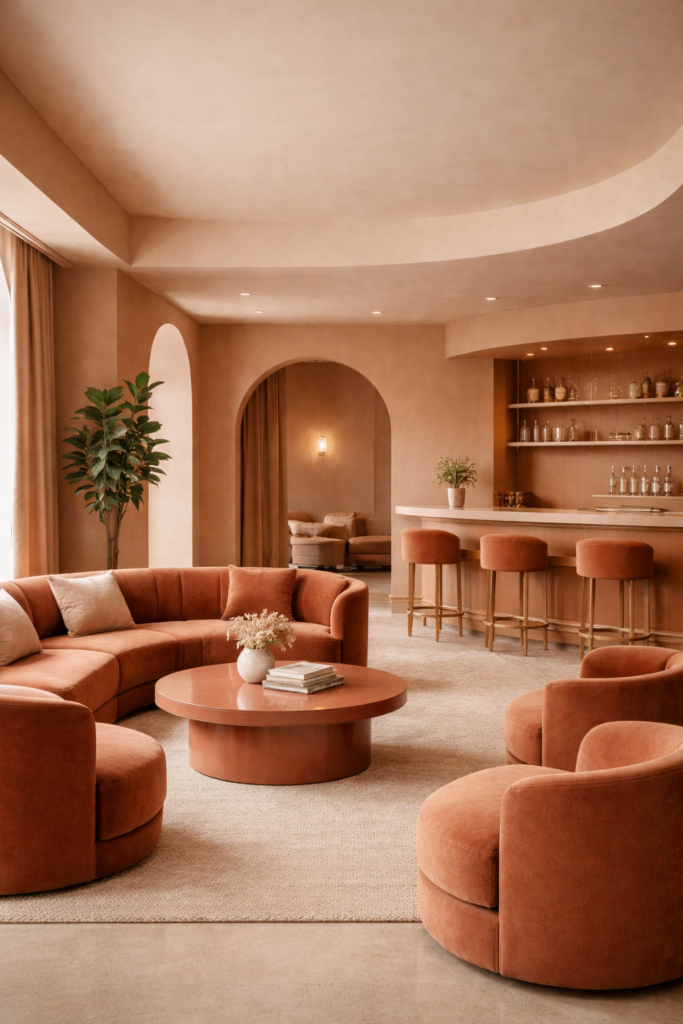
Colour drenching sees a single tone applied across floors, walls, furniture and finishes to create a bold, cohesive space with strong visual impact and brand recognition. The focus then moves upwards, with ceilings treated as a key design theme, using colour, lighting and features to add depth, character and atmosphere.
Michael Hall, ABDA Design
Emotional Durability
Restaurants and hospitality interiors will increasingly focus on emotional durability – creating spaces that feel warm, grounded and memorable rather than overly polished or trend-driven. As people seek meaningful, in-person experiences, venues are embracing craftsmanship, tactile materials, and reused or renovated elements. These design choices not only age well and withstand heavy use, but also help create environments where people feel comfortable lingering, connecting and returning.
Jennifer McClure, Faber Design

Nature-Inspired Interiors
Mother nature rules: The world needs a hug right now, so I see nature continuing to inspire our interiors in 2026. Think curved and relaxed forms in comforting, earthy tones, along with tactile, textured fabrics. Something like Protocol’s Cintura chair conveys this look perfectly and paired with their Fres side table, this would create a wonderfully inviting moment within any interior.
Maria Chandler, BECOME Interiors

Human Led Spaces
Interior design in 2026 sits at the intersection of people and intention. Spaces are designed around how people actually behave – how they move, gather, focus, pause, and decide – and expressed through confident, considered design moves. Material choices, layouts, colour, and lighting aren’t aesthetic afterthoughts; they’re tools to influence experience, mood, and performance. “Nice” is no longer enough. The spaces that matter are human-led, commercially sharp, and visually bold – designed to be used, remembered, and to work hard long after the first impression. Ruthless truth? If the design doesn’t change behaviour, it’s just styling.
Natalia Ratajczak, Why Not Design

Join the conversation and share your thoughts on the key trends shaping interior design this year. If you’re working on an upcoming project, we’d love to discuss how these ideas can be brought to life.
Contact us on +44 (0)20 8591 6770 or email [email protected].